
Protective clothing against cold: EN 342 and EN 14058 explained
Protection · 5 min read · Updated 2026-11-07
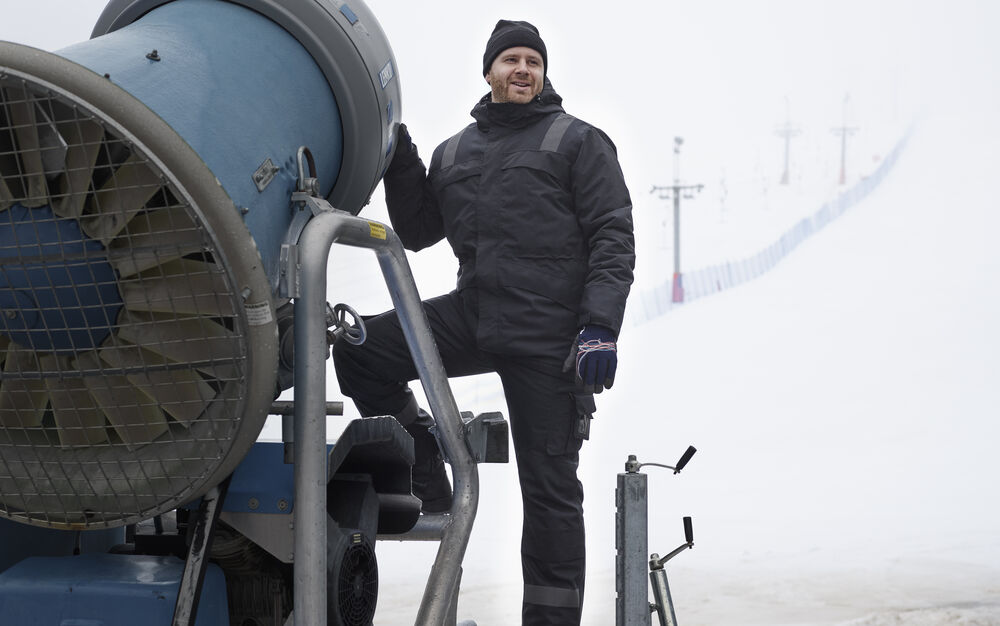
Cold at work is more than the figure on the thermometer. Wind and moisture cool the body faster, and someone standing still gets cold sooner than someone carrying and lifting. Two standards state how protective clothing against cold is tested: EN 342 for cold and EN 14058 for cool environments.
Winter jackets


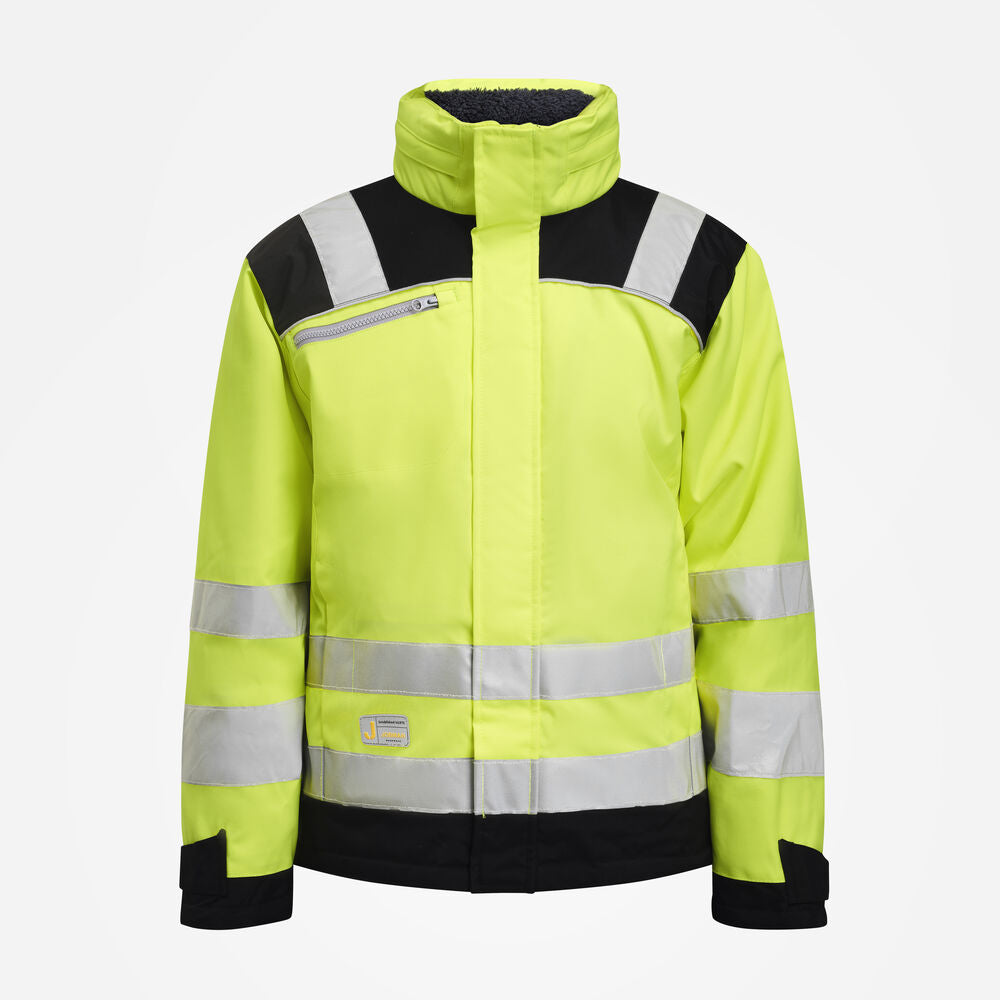

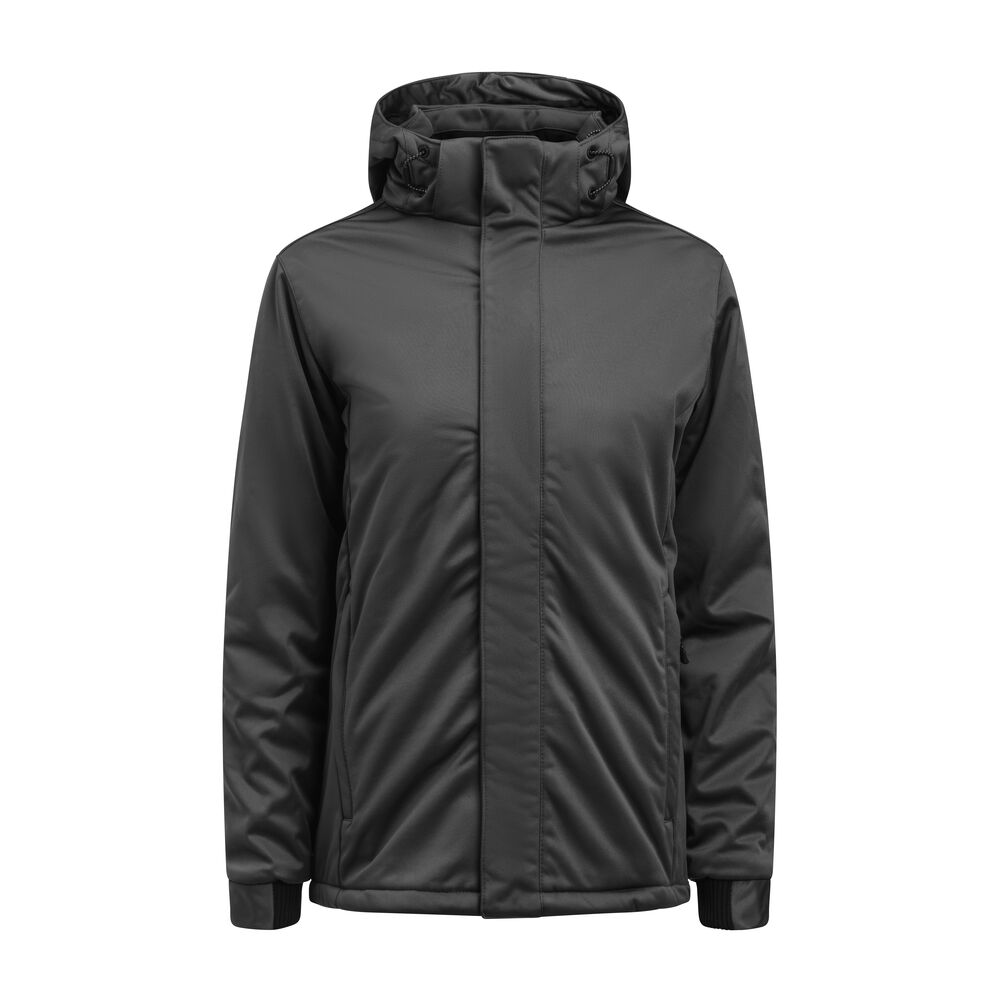


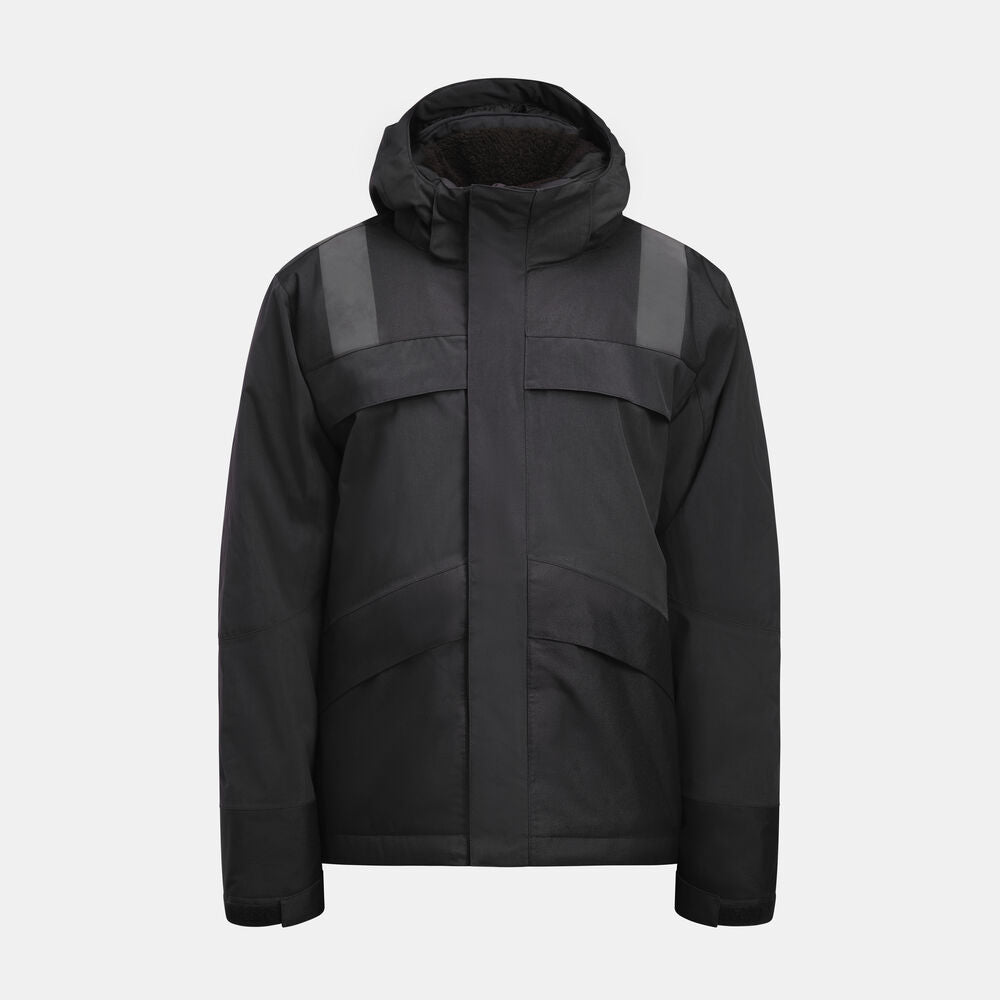
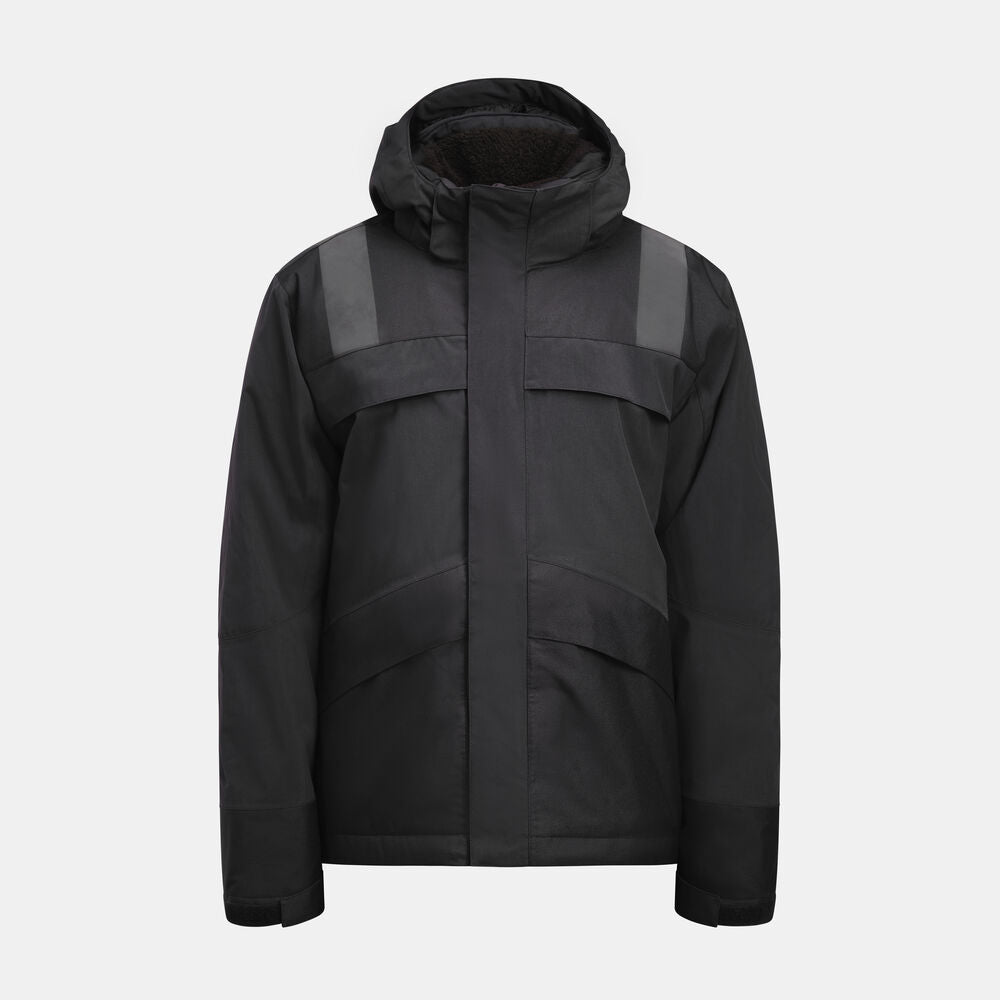
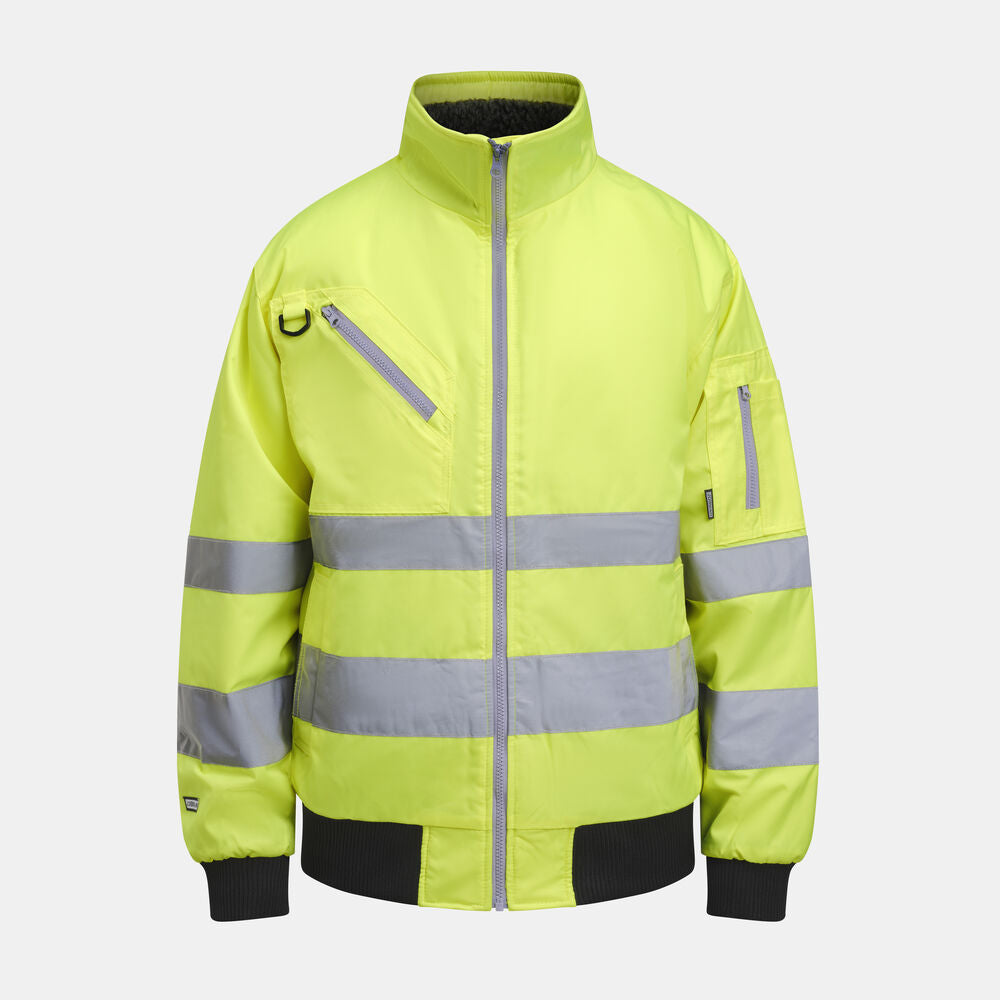


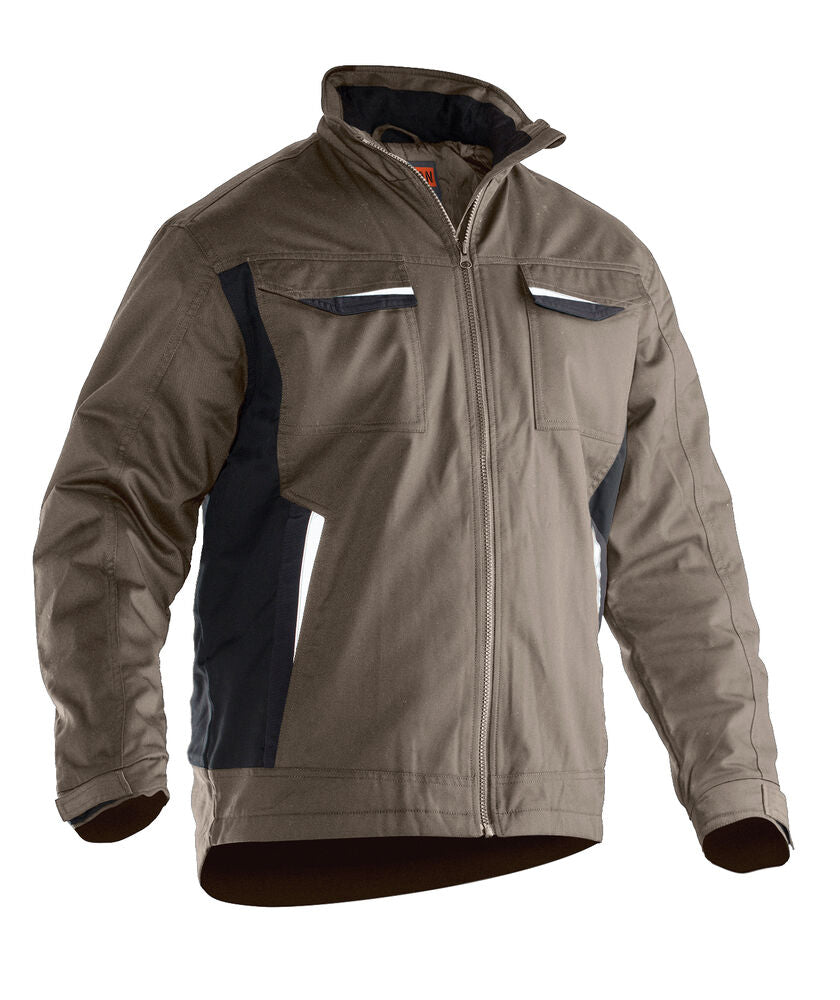
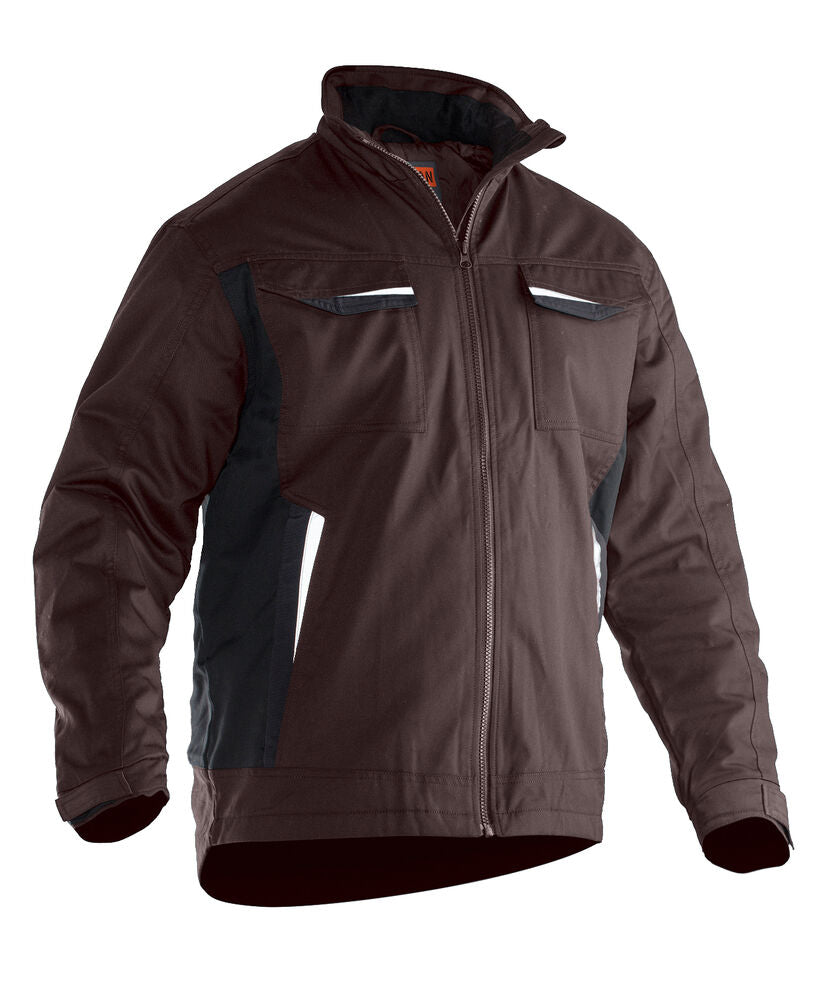
Two standards with the boundary at minus 5 °C
The marking says how much the garment insulates and how much wind gets through.
EN 342 applies to suits and garments that protect against cold at minus 5 °C and below, where moisture and wind are taken into account. EN 14058 applies to garments for cool environments above minus 5 °C and sets lower requirements for insulation, for example for work in cold rooms. Neither standard covers shoes, gloves or separate headwear.
The current Swedish editions are SS-EN 342:2017 and SS-EN 14058:2017+A1:2023.
How to read the marking according to EN 342
Next to the pictogram for cold there are up to three values, which are explained in the list below.
The insulation is tested on the suit or garment as it is meant to be worn. The same jacket can therefore be certified according to EN 342 together with matching trousers and according to EN 14058 when worn on its own. The manufacturer's instructions for use state which combination the certification applies to.
- Icler: the garment's effective thermal insulation in m²K/W. A higher value insulates better. Some manufacturers convert the value to clo, where 1 clo corresponds to 0.155 m²K/W.
- AP: air permeability in class 1 to 3. Class 3 lets through the least cold air and protects best against wind.
- WP: water penetration resistance. The test is optional in EN 342, so a winter garment can be certified against cold without being waterproof.
How to read the marking according to EN 14058
EN 14058 states the garment's thermal resistance, Rct, as a class. If the garment has also been tested for air permeability and water penetration resistance, those classes are shown under the pictogram. Typical garments are fleece jackets, pile jackets, vests and lighter insulated jackets. They work on their own in cool environments and as a mid layer under a shell garment when it gets colder.
Choose the level according to the work, the wind and the time outdoors
The Swedish Work Environment Authority's rules have no temperature limit for outdoor work. The employer must assess the risks, and the risk is greatest when low temperature is combined with strong wind. Protective clothing is one of the measures, together with breaks in warmer premises and adapted working hours.
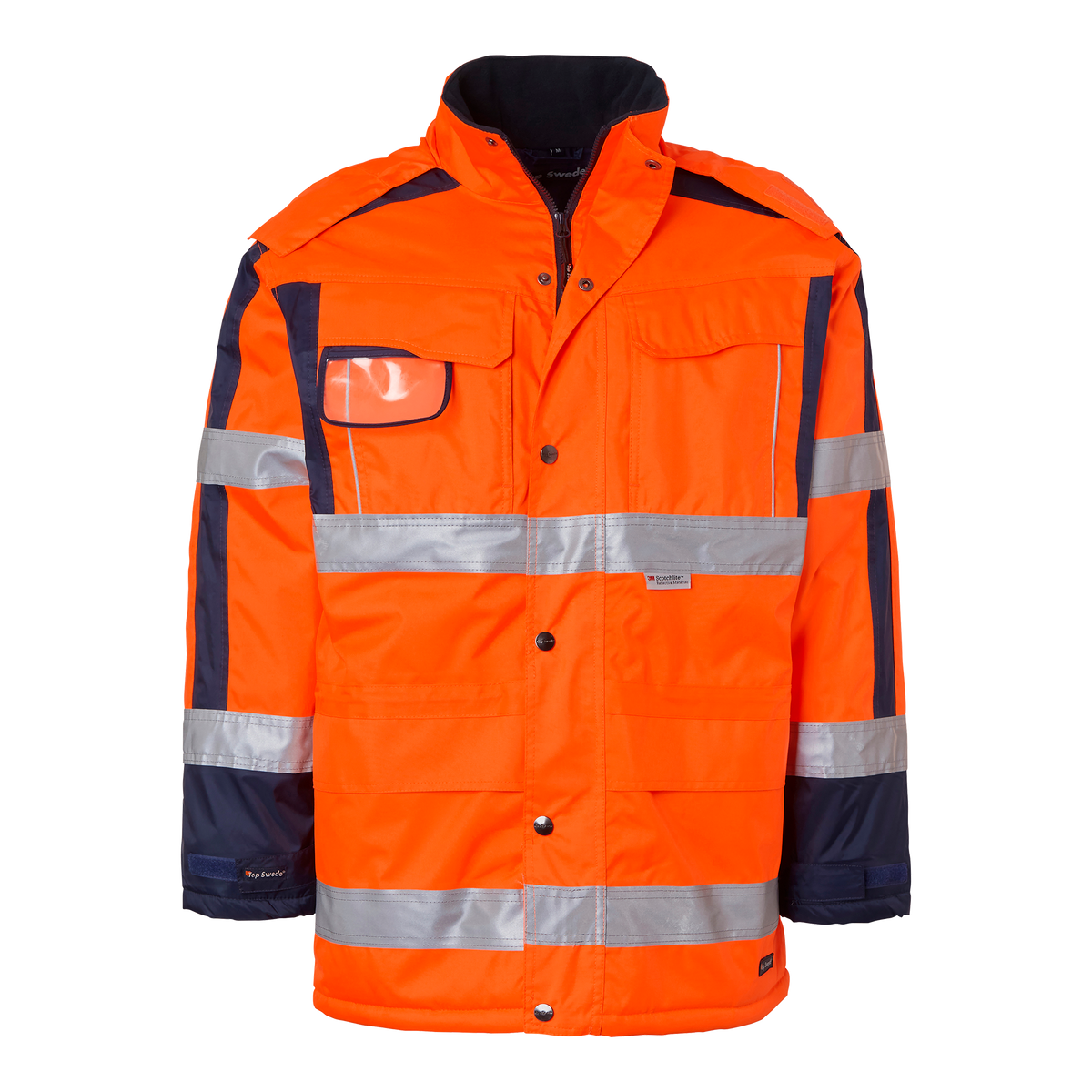
- Cold stores and cold rooms above minus 5 °C: garments according to EN 14058, in a hi-vis version where forklifts drive.
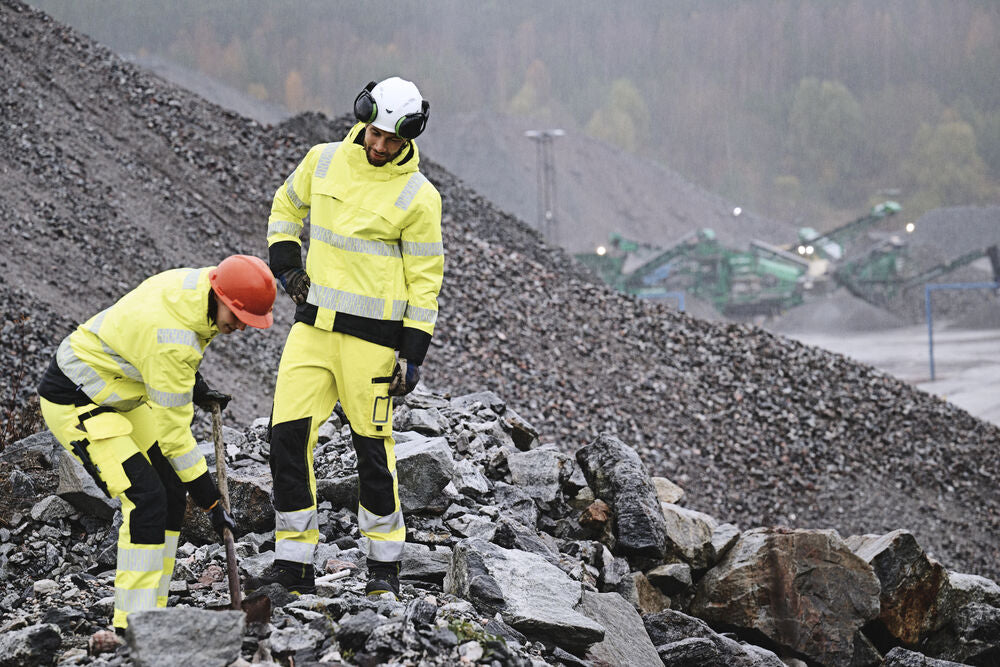
- Freezer rooms and outdoor work below minus 5 °C: garments according to EN 342. Stationary work, such as machine operators, traffic controllers and work in ports, requires a higher Icler than work where you move a lot.
- Windy places, such as road embankments, quays and roofs: choose air permeability class 3, since the wind takes the heat even when the temperature is the same.
- Physical work in the cold: layer on layer with a mid layer according to EN 14058 under the shell, so that the staff can take off a layer before they sweat. Moisture in the clothes lowers the insulation.
- Rain and sleet: choose garments that also meet EN 343. Many winter jackets and winter trousers are tested according to both EN 342 and EN 343, see the guide on rainwear.


Chilled food premises and extreme cold
In chilled food premises the clothing against cold is worn under the hygienic protective clothing. The Swedish Work Environment Authority points to the standard SS-EN ISO 11079 (IREQ) as an aid for calculating which clothing is needed and how long the work shifts can be.
The PPE Regulation (EU) 2016/425 places protection against cold corresponding to minus 50 °C or below in the highest risk category, category III, with stricter requirements for how the manufacturer is monitored.
Logo on winter garments
The decoration method is chosen according to the surface material. Embroidery makes holes in a membrane and can make the garment leak at the logo, so transfer is often right on shell garments. On hi-vis garments the logo must not cover so much fluorescent area that the class is lost. We state the method in the proof.
Frequently asked questions
EN 342 applies to cold at minus 5 °C and below and states insulation as Icler and air permeability in class 1 to 3. EN 14058 applies to cool environments above minus 5 °C and sets lower requirements for insulation. A fleece garment according to EN 14058 can also be worn as a mid layer under a shell garment.
Not necessarily. Water penetration resistance is an optional test in EN 342 and is stated as WP. If the garment needs to stay waterproof in rain and sleet, choose one that is also certified according to EN 343.
It depends on how the garment has been tested. Some jackets are certified according to EN 342 only together with matching trousers, and according to EN 14058 when worn on their own. The manufacturer's instructions for use state which combination applies.
If the garment has been tested according to EN 342, EN 14058 or EN 343, it is stated on the product page. The classes and values are shown in the garment's marking and in the manufacturer's instructions for use.

Sources
- SS-EN 342:2017, Protective clothing, ensembles and garments for protection against cold
- SS-EN 14058:2017+A1:2023, Protective clothing, garments for protection against cool environments
- Regulation (EU) 2016/425 on personal protective equipment
- The Swedish Work Environment Authority (Arbetsmiljöverket), risks with cold
Would you like help choosing?
Describe your needs and we will come back with a concrete proposal: products, decoration and price.
More guides


