


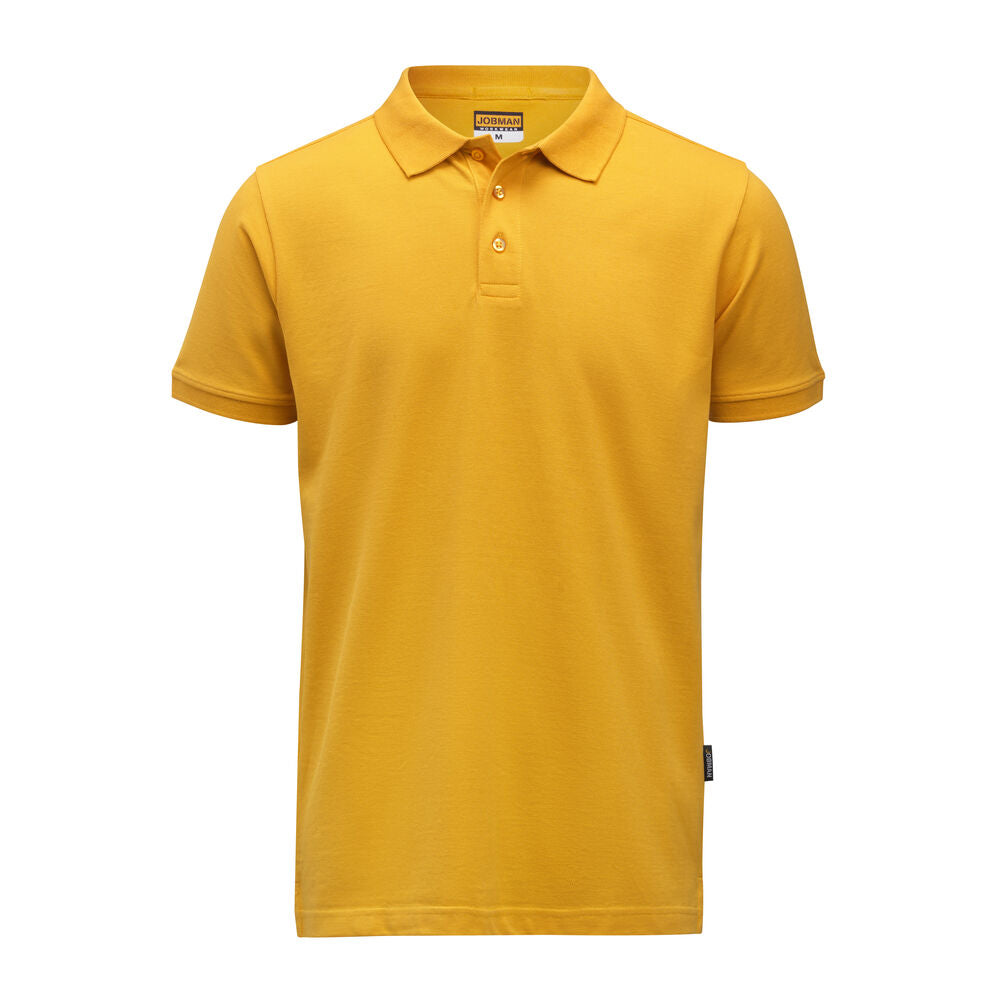
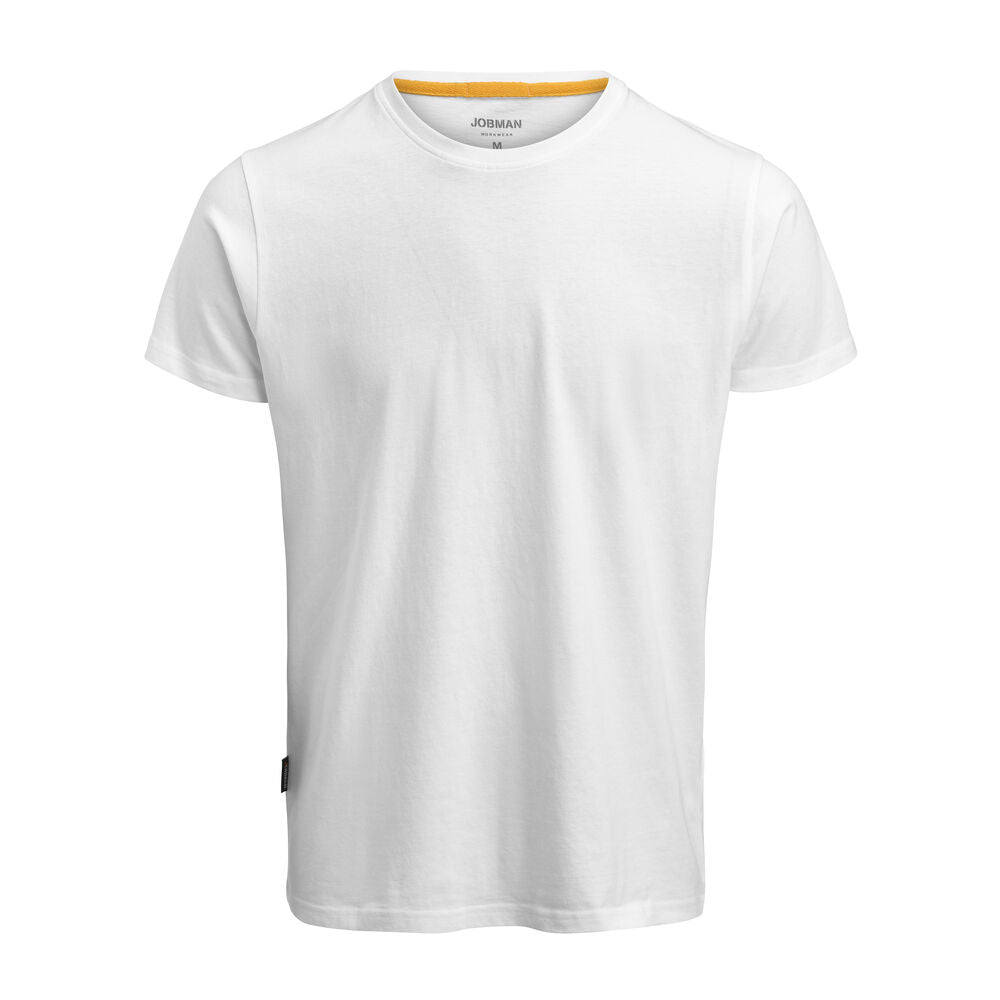


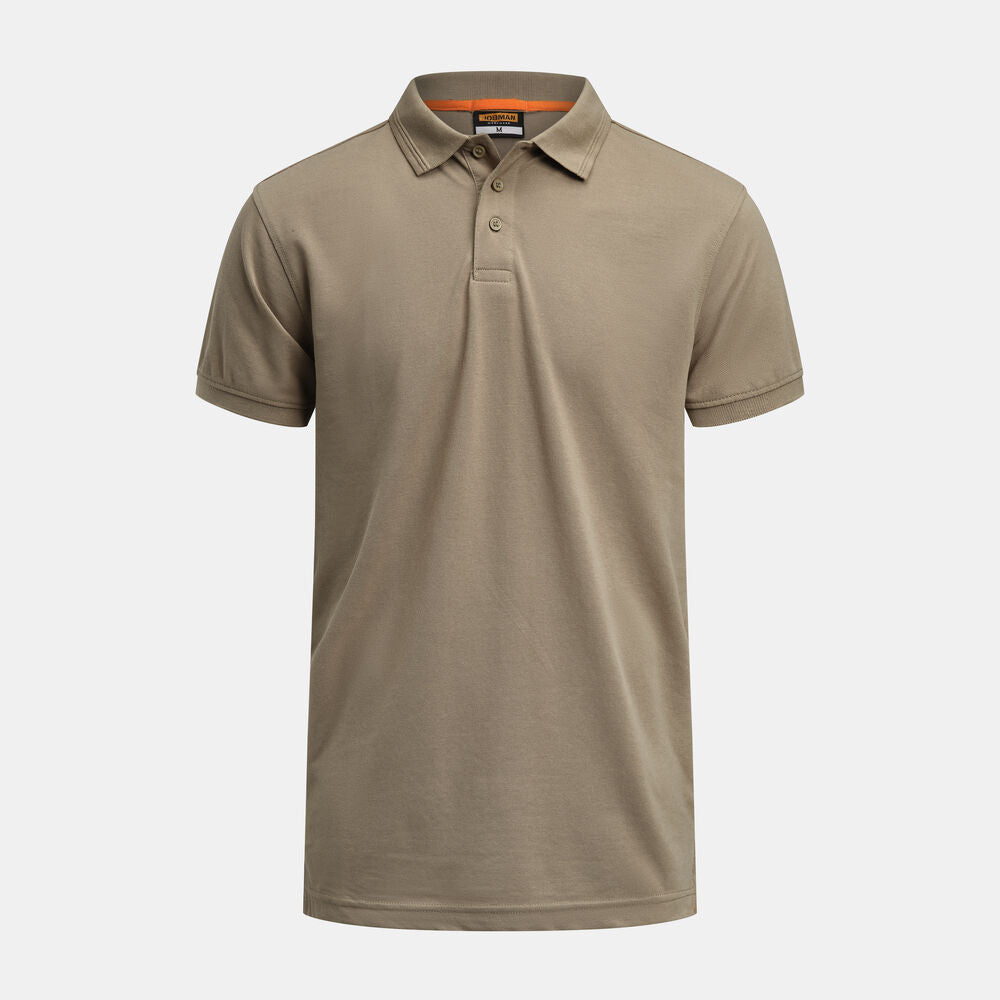


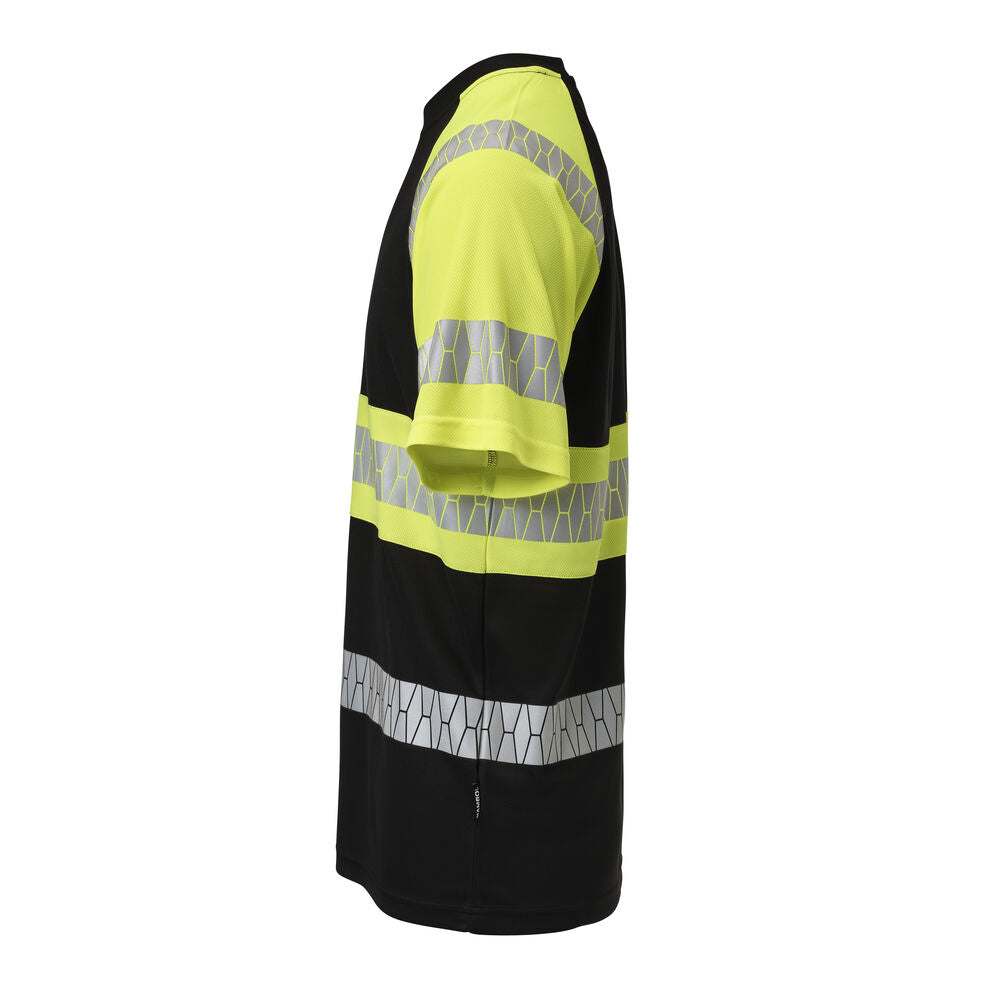







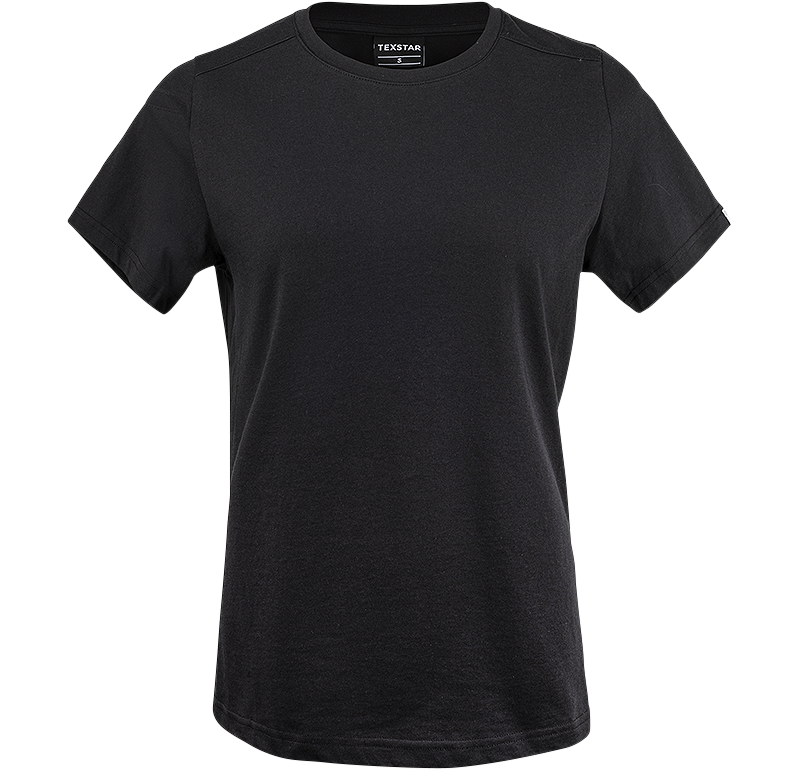
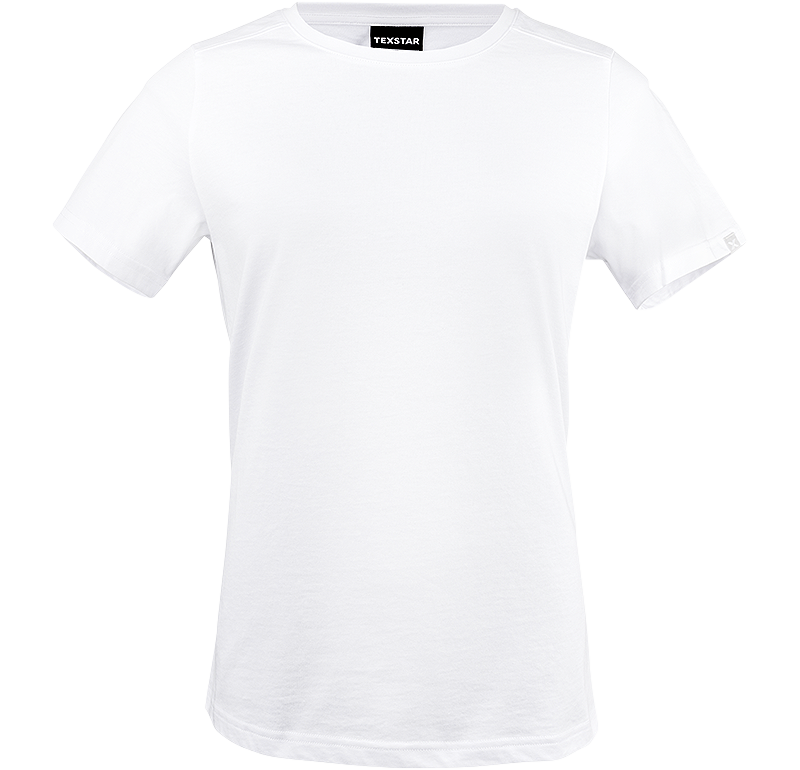


About work t-shirts & polo shirts
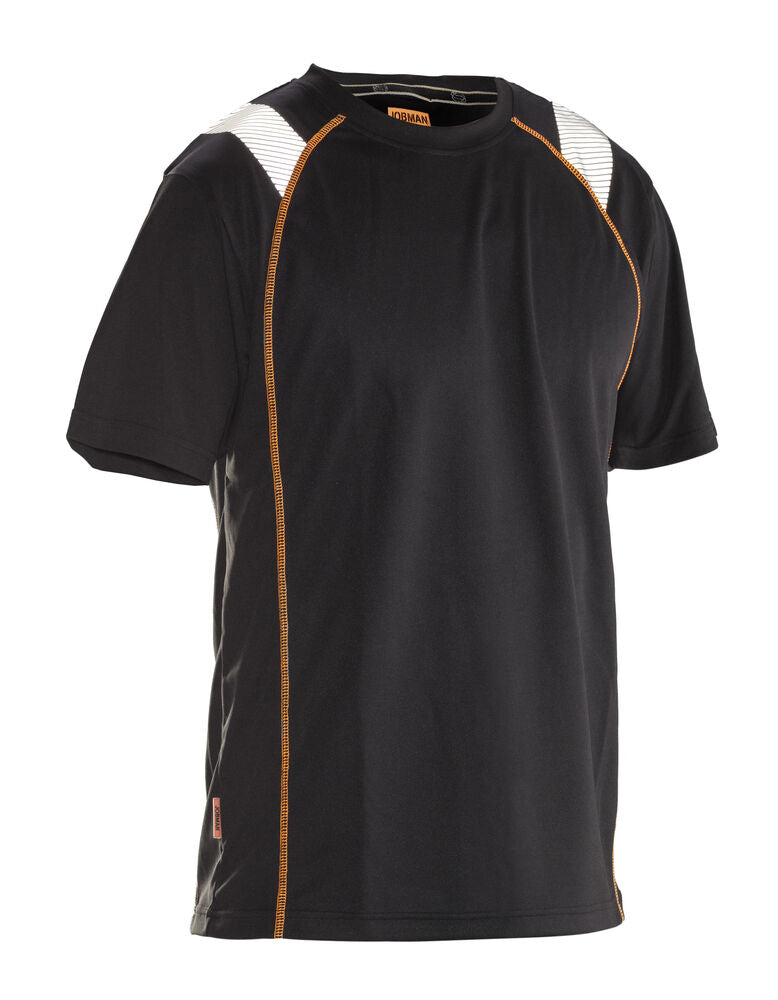
Choose according to the environment. Cotton is comfortable and carries print well, while polyester and blends dry faster and keep their shape after many washes. Hi-vis t-shirts and hi-vis polo shirts are classified according to EN ISO 20471, and for work in the sun there are garments with UV protection according to EN 13758-2. Order several per person, since t-shirts and polo shirts are changed and washed most often. The decoration is done after a proof, and contract customers buy at contract price on invoice.
Cotton, technical fabric or blend
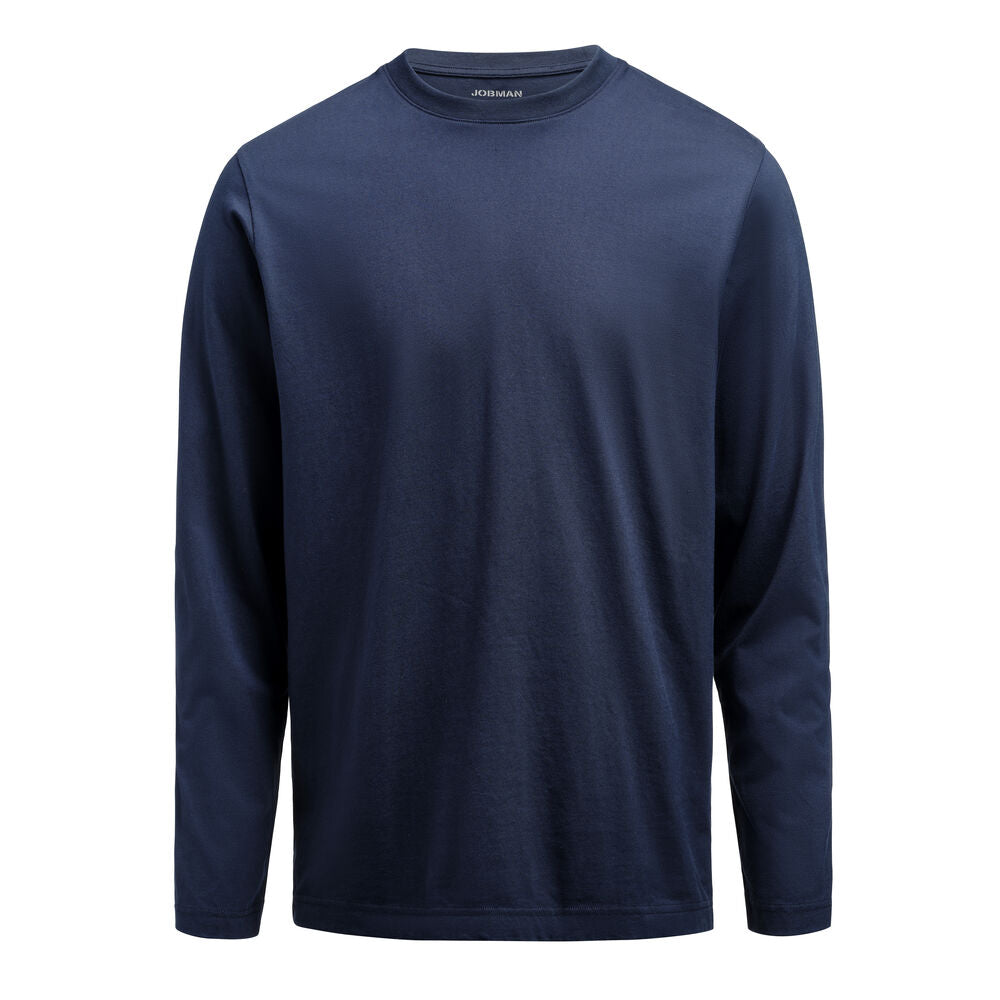
Cotton is soft, breathes and carries print well, and combed cotton gives a smoother surface. Technical fabrics in polyester, sometimes with bamboo or modal, wick away moisture and dry quickly, which suits physical work. Polyester and cotton blended is a durable middle ground that keeps colour and shape. The fabric weight is stated in the product description when the manufacturer specifies it, and a higher fabric weight gives a thicker fabric.
Hi-vis and UV protection
Hi-vis t-shirts and hi-vis polo shirts are available in class 1, 2 and 3 according to EN ISO 20471, with short or long sleeves. The class can differ between sizes, since smaller sizes have less fluorescent area, and it is stated on the product page when the manufacturer has specified it. EN 13758-2 applies to UV protective clothing: garments that meet the standard are marked UPF 40+, which means that the fabric lets through less than one fortieth of the UV radiation.
Print or embroidery on t-shirts and polo shirts
Print suits t-shirts, especially with large designs on the back: screen printing for larger series, transfer or DTF for fewer garments and logos with many colours. Embroidery is the first choice on polo shirts and gives a solid impression on the chest. On hi-vis garments the logo is placed so that the class is preserved. The minimum quantity is shown per method in the options on the product page, and with print and embroidery, production takes 2 to 10 working days after the approved proof.
Frequently asked questions about work t-shirts & polo shirts
Embroidery or print on polo shirts?
Embroidery is most common on polo shirts and gives a solid impression on the chest that withstands washing well. Print also works, for example for large designs on the back or logos with many colours and fine details. We recommend a method according to garment, logo and quantity and show the result in the proof.
How many t-shirts does each employee need?
It depends on how often the garments are washed. Count so that there is a clean t-shirt every working day while the others are in the wash; if the washing is done once a week, at least as many as the working days are needed. Save the size per person in the company portal, so the reorders are right.
Are t-shirts and polo shirts available with a hi-vis class?
Yes. Hi-vis t-shirts and hi-vis polo shirts are available in class 1, 2 and 3 according to EN ISO 20471, with short or long sleeves. The class can differ between sizes and is stated on the product page when the manufacturer has specified it. The risk assessment and the client's requirements decide which class is needed.
What does UPF 40+ mean on a work t-shirt?
That the fabric lets through less than one fortieth of the sun's UV radiation, tested and marked according to EN 13758. Garments that meet EN 13758-2 may be marked as UV protective. The protection applies to the skin under the garment, so for those who work outdoors all day it is a complement to other sun protection.
Are polo shirts and t-shirts available in a women's model?
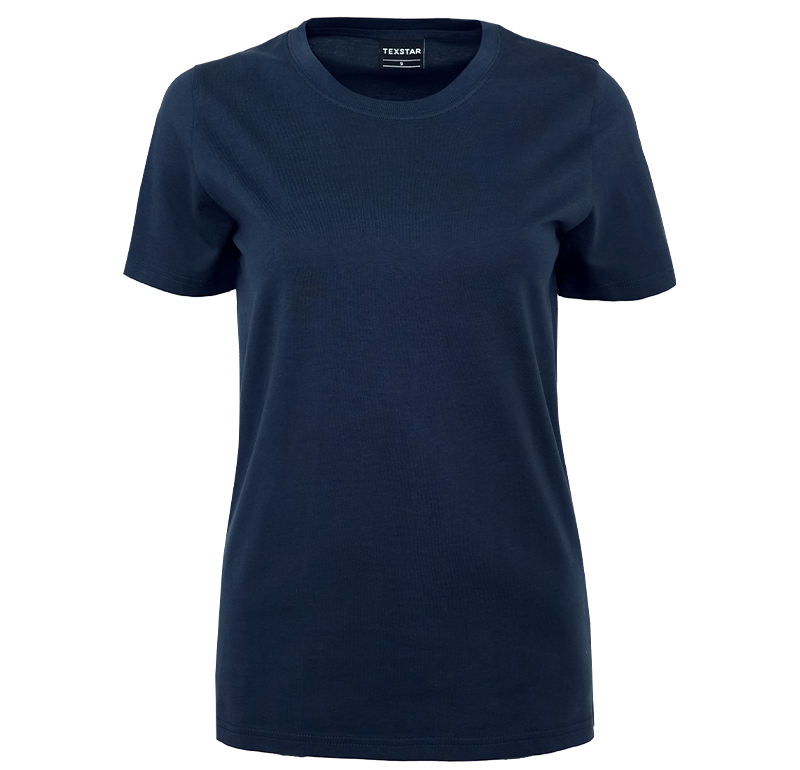
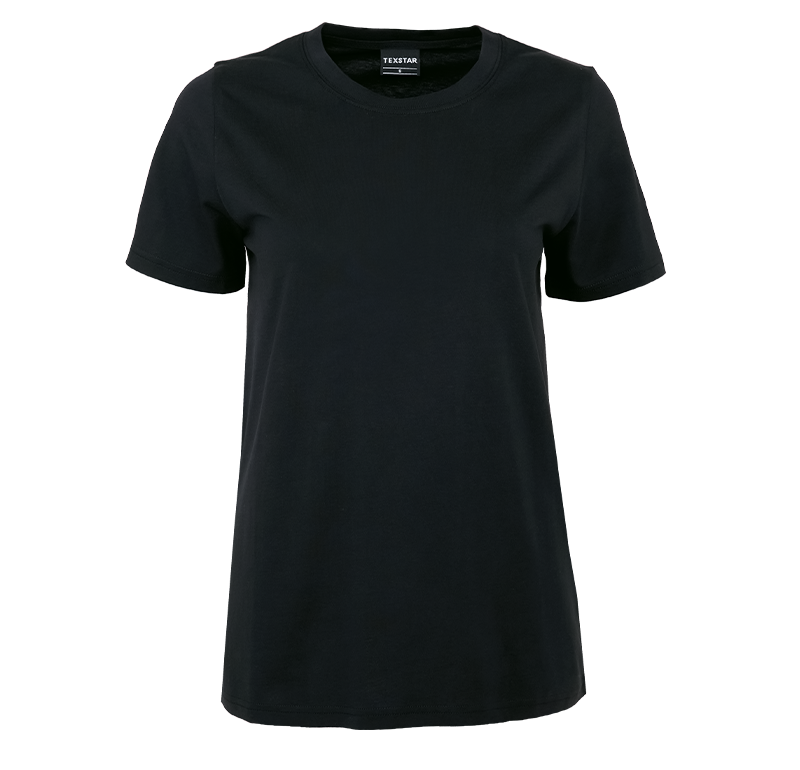
Yes, several t-shirts and polo shirts are available in a women's model with a different fit over the shoulders and waist, so that the whole team can wear the same garment in the same colour. Use the manufacturer's size chart for the model, since the fit differs between brands.